

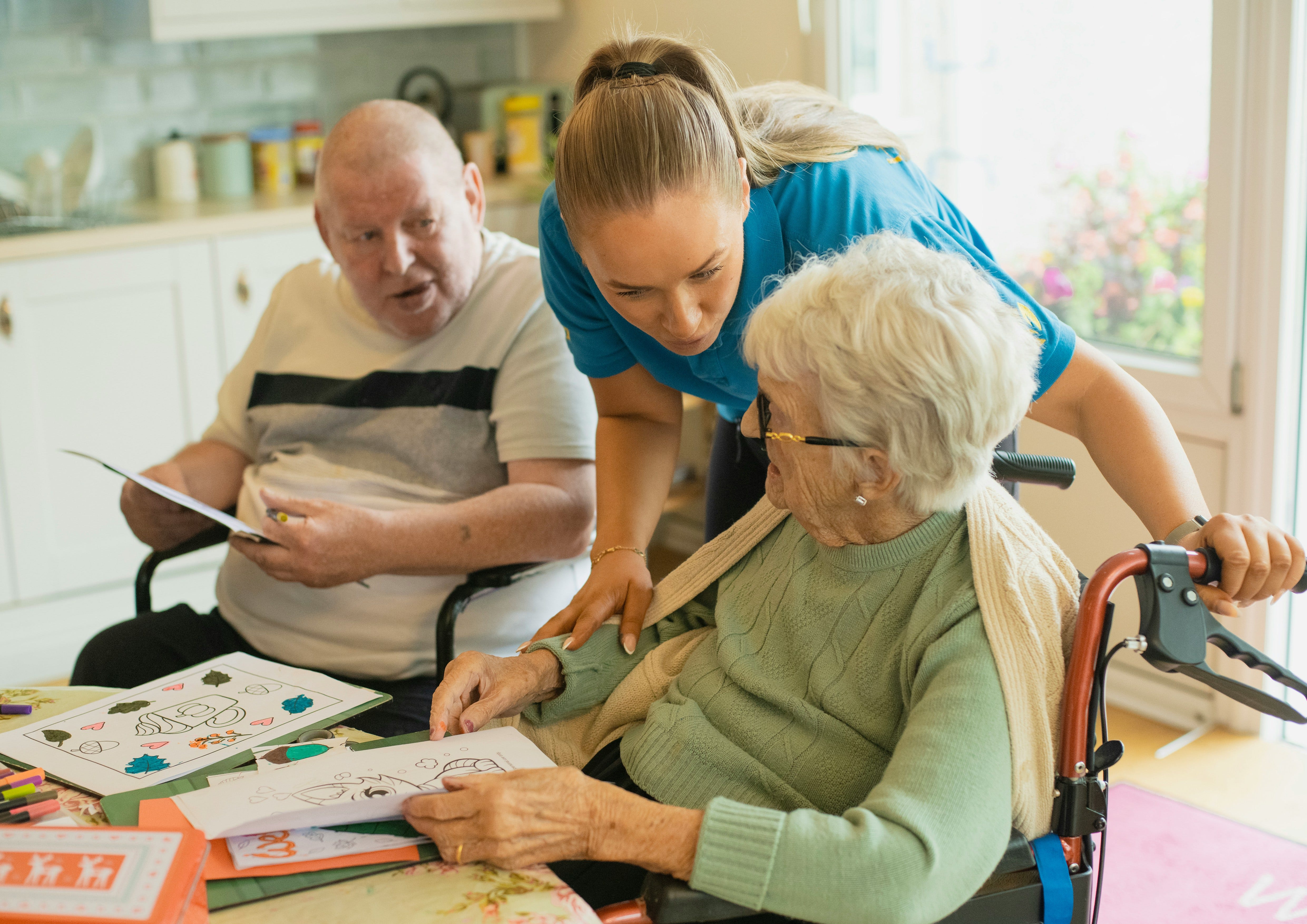
Photo by Age Cymru on Unsplash
Last month two major players in the older adult space announced a collaboration to produce a landmark study, Reimagining the Future of Senior Living. The National Investment Center for Seniors Housing & Care (NIC) and the MIT AgeLab expect to issue their report in three years.
If you can’t wait three years to discover the future of senior living, I am pleased to report today on the results of my one week of research on that topic. Based on my findings, the question is not what senior living’s future holds, but whether senior living (as we know it today) has any future at all.
On paper, the future of senior living looks secure. The leading edge of the Baby Boom is 80 years old this year, and the 80+ population will grow by one million annually through the early 2030s, according to NIC, so there will be no shortage of prospective residents for decades.
But there are a few thorns in this rosy picture.
Thorns Among the Roses
For starters, Baby Boomers as a group are not buying what the senior living industry is selling. The current product puts a premium on physical safety and access to medical services. Some call that a “hospitality” model – by which they mean services not unlike a hotel or a resort – filling residents’ every need. But it is also a “hospital” model – a comfortable residence for medically fragile elders.
Maybe that appealed to previous generations and their adult children, but Baby Boomers (and Gen Z, right behind them) want something quite different. And some senior living industry leaders recognize it.
“Boomers will not reward operators simply for being available,” Jesse Jantzen, CEO of Lifespace Communities, told Senior Housing News. “Many communities were designed around a more traditional view of retirement. Boomers arrive with different expectations around work, travel, family roles, and daily routines. Communities that feel rigid, clinical, or dated will struggle.”
What Boomers want, surveys say, are amenities that focus on physical and mental fitness and wellness, opportunities for learning, connections to their communities, and an active social life. They are less interested in medical care than in how facilities can help them live their best lives. They also want more choices.
The Housing Shortage
A second thorny issue is the housing supply. Though many senior living communities report occupancy rates above 90%, few new residences are in the construction pipeline – the lowest level of supply since 2012, according to NIC. Investors are holding back because of high interest rates and inflated construction costs. Meanwhile, half of what does exist for seniors is at least 25 years old. “Once you get to 25 years, you’re not just replacing the carpet,” says Mark Heckman, senior living sector at Moseley, an interdisciplinary architectural firm. “You’re looking at systems and then accommodating the new desires of the next generation.”
Investors are also reluctant to back new approaches, such as communities that combine senior housing, family housing, childcare, and senior care. Despite proven market demand for these mixed-use projects, “the challenge is in proving to institutional capital that this is a long-term societal trend that will remake how we plan housing and care,” says JP Emery, a senior living leader at the Gensler design firm.
One final thorn: affordability. Most of the current stock is only affordable to the top 10% of the older adult market. For the least affluent 10%, there is limited subsidized housing. There is next to nothing affordable for the 80% in the middle,
To sum it up, the ranks of adults 80 and older are swelling by one million each year, there are few vacancies in senior living facilities for them, and in any case, most are not interested in the product as it exists today.
“Boomers are rewriting the rules,” Jantzen added, “and they won’t wait for us to catch up.”
Not Waiting Around
Indeed, they won’t. While the senior living industry works on catching up and retooling its product, Boomers will be forced to come up with their own alternatives.
This is already happening.
In place of one-size-fits-all communities, a variety of niche communities are forming. seniors. From Latitude Margaritaville for the it’s-always-sundown-somewhere crowd to college-affiliated communities for lifelong learners, there are more choices than ever. Niche communities are available for equestrians, aviators, artists, amateur astronomers, East Asians, LGBTQ, spiritual seekers, and more.
Some older adults opt for rental apartments located within or adjacent to a vibrant neighborhood, with ready access to services such as dry cleaning, hair stylists, and package dropoffs. When these properties are marketed to “active adults” – the new marketing buzzword for retired adults who are still energetic and engaged – they may feature amenities such as a gym, a pool, pickleball courts, theatre rooms, walking paths, and bike trails.
For adults who choose to age in their homes and can’t afford to live in a senior living community, more facilities are offering Continuing Care at Home (CCAH), which bring their care services directly to those aging in place.
So, what is the future of senior living? What’s on the market today doesn’t appeal to the “active adults” among Boomers and Gen X. The industry can’t attract the capital to build more units to satisfy the surging demand. Aging in place continues to look appealing to the majority who can’t afford the high cost of entry.
Necessity is the mother of invention, sayeth a familiar proverb. I predict that the generations aging into their 70s and 80s will be compelled to seek out alternative housing arrangements – co-operatives, home sharing, multi-generational housing, and more – or invent their own new solutions, long before the senior housing industry gets its act together and adapts to their wants and needs.
We are encouraging seniors to convert unused parts of their homes into little apartments where tenants can provide income some security some help with chores and conviviality. Imagine neighborhoods with many sweets in them that would be an intergenerational neighborhood keeping people active and connected and probably many needs met. Https://in-homesuites.Org
When I think of matching a need and an under-utilized resource, I wonder how houses of faith could be expanded. The legalities and logistics may be daunting, but could something work? My cousin's congregational church in MA is hundreds of years old but on the brink of closing due to dwindling membership and funds. What a tragic loss that would be of a beautiful building and grounds, not to mention historic service to a community.