
Taking the Long View
How to gain a new perspective on the present.

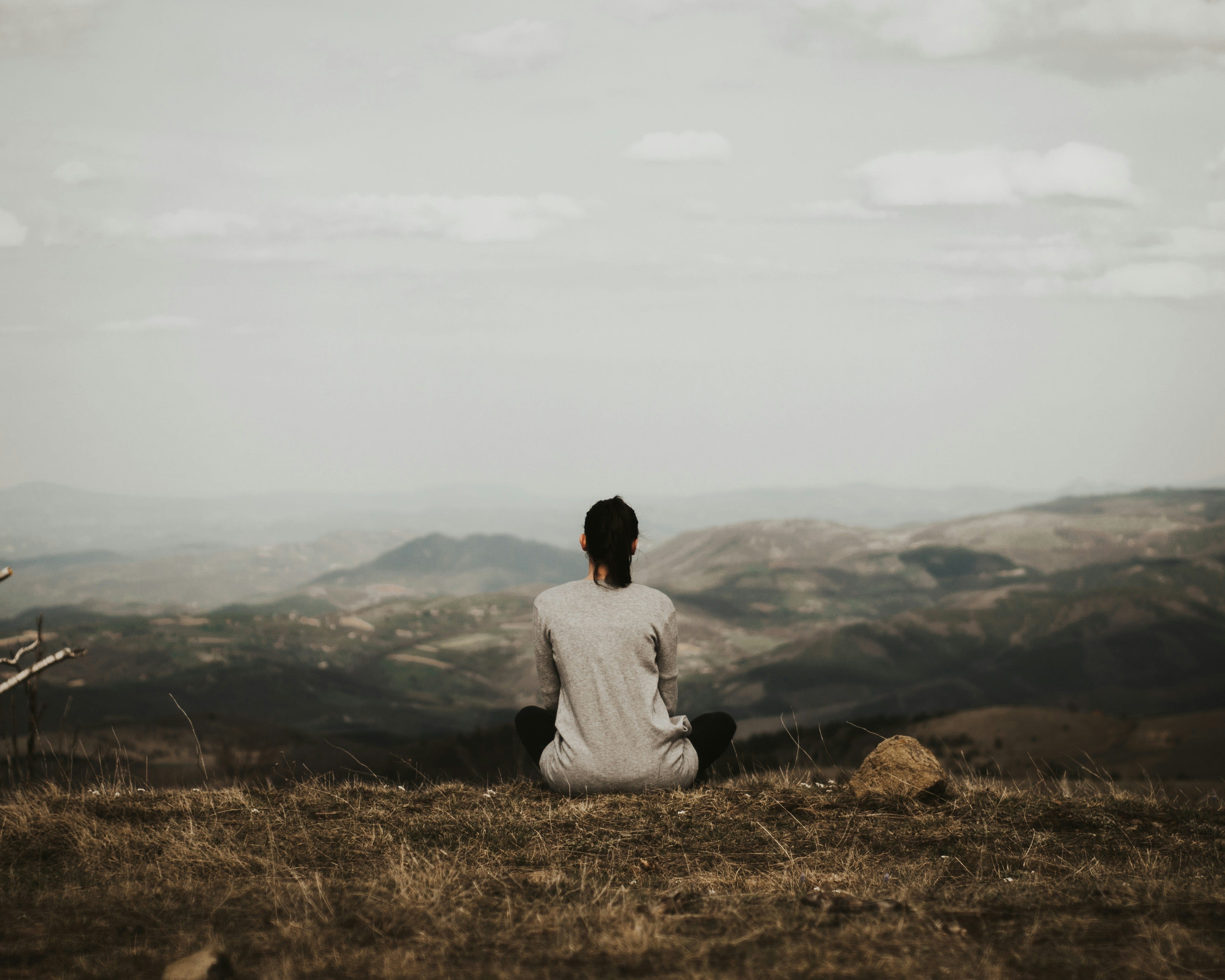
Photo by Milan Popovic on Unsplash
In the spring, says poet Alfred Lord Tennyson, “ a young man’s fancy lightly turns to thoughts of love.”
In the spring, says I, an old man’s fancy heavily turns to thoughts of eternity.
Not to be morose, but it comes with the territory. At a certain age, your mind naturally tends to process and synthesize all you have seen, all you have done, all you have learned. You recognize patterns that repeat and situations you have lived through that are now recurring. And you tend to have a long-range perspective on your life and your legacy.
My thoughts on this are influenced by the work of Mary Catherine Bateson, an anthropologist and the daughter of anthropologists Margaret Mead and Gregory Bateson. Among her works are two memoirs, Composing a Life and Composing a Further Life, published 20 years apart. In the latter, as well as in a talk available on YouTube, she describes an emerging new stage of life, the one between ending a career and aging’s final decline, which she calls Adulthood II (and I call The AfterWork). She contends that society would benefit by mobilizing older adults to share their wisdom and energy, as well as their life experience.
Denise Taylor, whose essay about “olderhood” introduced me to Bateson, believes our brains in this new stage of life have the potential to think in a different way. In particular, they can resist the cultural narrative urging them to withdraw and segregate themselves from the world, on the one hand, and “the dominant narrative about later life [which] has become a relentless pursuit of productivity….’Never stop working’ has become a moral imperative disguised as encouragement.” The polar opposite of seeing older people as superfluous, it suggests that the only good senior is a working senior.
Life as a Whole
Bateson advocates neither. What her conception of Adulthood II offers, according to Taylor, “is the possibility of perspective: the ability to see one’s life as a whole, to recognize patterns across decades, and to weight present decisions against longer consequences.”
It suggests to me that all the striving of our adult years has brought us to a mountain peak. Behind us, we see generations past that informed the people we have become. Before us, we envision the younger generations that we have influenced and try to imagine how they will use what we taught them. We have to wonder if anything we said or did will help them (or, God forbid, harm them) as their lives go forward.
On the mountain peak we stand at the center of a five-generation wingspan that extends from our grandparents to our grandchildren. Viewing our lives from that perspective puts the immediate issues of the present day into a different light.
As the author of Ecclesiastes, obviously a person well up in years and having the scars to prove it, famously framed it:
What has been will be again,
what has been done will be done again;
there is nothing new under the sun.
But it’s exactly this perspective that can be valuable when you see younger people around you in a lather about the prospect of an oil embargo (been there, done that), a government led by bad actors and idiots (anyone remember the Nixon years?), or rapid climate change (but did you know the Sahara Desert was lush and green just 5,000 years ago?), or a true love gone awry (not the first, nor the last). From our hard-earned perspective, we can assure younger companions that no, the world is not coming to an end just yet, and life does go on. (Whether they choose to heed our hard-earned wisdom is another matter.)
This way of thinking – perhaps it is advanced age’s superpower – can also be conceived as peripheral vision, enabling us to see past the dominant narrative – particularly the one that says our value is only measured by our output – and to consider a larger outlook, one where human value is measured by one’s character and depth.
Make the hike up to the mountain peak. The view can be oddly comforting.
Well said. Another one for nothing new department: Stupid war? Vietnam.
I wish I could adopt that wise perspective, but as I see democracy crashing down around me, I can't think of a time when we were so close to the edge. Don't get me wrong, I haven't given up hope, and I know that, as King Solomon said, "this, too, shall pass.".It's just that it feels different this time around.