

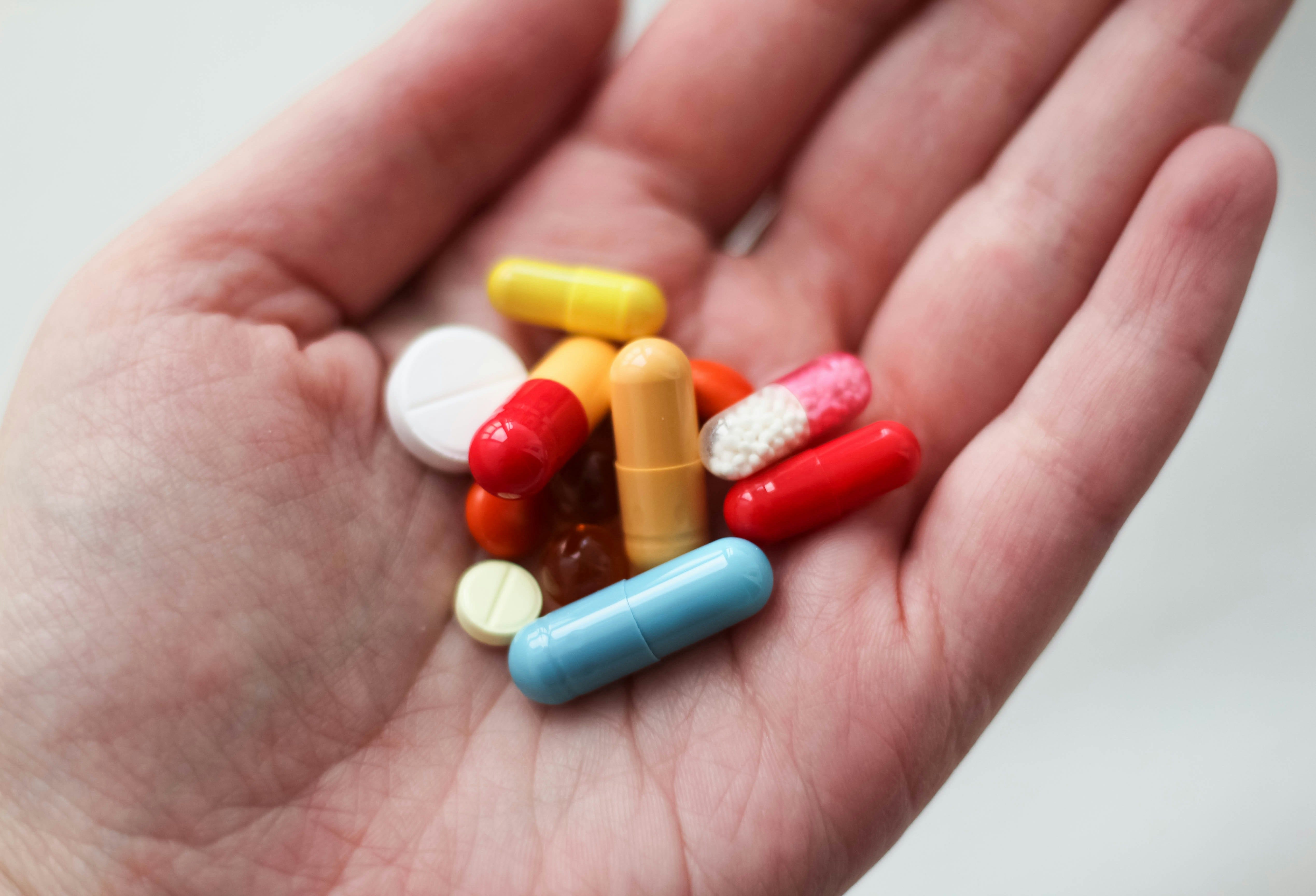
Photo by Ksenia Yakovleva on Unsplash
Your doctor writes you a prescription for a name-brand drug. Your pharmacist fills the prescription with a generic drug instead. You don’t think twice about it, because you have been assured for years that generic drugs work just as well as their name-brand counterparts.
But what if those assurances are not quite true?
Evidence is starting to paint a picture of the generic drug industry that suggests caution might be a better attitude than blind faith.
If all generic drugs on the U.S. market were made in America and carefully regulated by the Food and Drug Administration (FDA), perhaps trust would be more appropriate. The FDA is well respected internationally as the most thorough and effective agency when it comes to the safety of drug products.
Imported Ingredients
But in fact, about 80% of generic drugs and their ingredients are imported from other countries, primarily India and China. The FDA does inspect drug manufacturing facilities overseas, but rigorous oversight is difficult.
Last year a study by a team of Ohio State University and Indiana University researchers found that generic drugs manufactured in India were linked to significantly more “severe adverse events” for patients than U.S. produced drugs.
“The FDA assures the public that all generics patterned after the same original drug should be equivalently safe and effective,” says Indiana University associate professor George Ball, a study co-author. “However, that is not necessarily the case when it comes to generic drugs made in India.”
India produces about 40% of all generic drugs on the U.S. market, according to Bottle of Lies: The Inside Story of the Generic Drug Boom, a 2019 book by investigative journalist Katherine Eban. She found that some foreign companies encourage fraudulent data. And many FDA staff members told Eban that FDA inspections overseas are announced in advance, giving companies time to hide unsafe practices.
This is old news to Gina Pera, author of Is It You, Me, or Adult A.D.D.? and a respected expert on adult ADHD. Since 2009 she has been warning readers on her blog, ADHD Roller Coaster, that generic drugs for ADHD symptoms sometimes work differently than the brand-name drugs they replace. While the generic may be identical in its active ingredients, strength, and dosage form, it may have different inactive ingredients, tablet construction, or a different drug-delivery technology. It may even vary in the amount of active ingredient: the FDA standard for “bioequivalence” is between 80% and 125% of the original (although in practice, the variations tend to be 3.5-4%).
Delivery method is especially important for extended-release drugs such as Vyvanse and Concerta. People taking generics that used a different delivery system from the brand-name drug have reported variations in how quickly the medicine began working, how evenly it controlled symptoms, and how long it remained effective.
Unfortunately, says Pera, patients and physicians rarely consider that the manufacturer or the generic drug could be an issue in how well the drug works. Yes, a poor response to a drug could be because the dosage is wrong or the medication is not a good fit for that patient. But it could also be that the generic is not really “bioequivalent” (i.e., works exactly the same) as the name brand. It may only be “biosimilar.”
Surprise Substitutions
One other factor makes it harder for patients to understand their medications. Pharmacy Benefit Managers (PBM), which act as intermediaries between health insurers, drug manufacturers, and pharmacies, can change which generics, by which manufacturers, are covered from month to month. Some pharmacies, but not all, inform you of substitutions.
But how do you know where your medicine comes from?
Short answer: You don’t.
You can find a limited amount of information on the labels from the pharmacy. Below the name of the drug (printed in bold, all capital letters) will be “Generic for” and the name of the name-brand drug (in eye-strain-size type). You will also find the name of the manufacturer. Looking them up may tell you if they are domestic or international.
Or not. I checked the labels on the seven prescriptions I take daily. All seven are generics. When I looked up the manufacturers, each of them was a U.S.-based company – but at least five of the seven have manufacturing facilities in India, China, or Argentina. Some are U.S. affiliates of Indian or Chinese corporations. You can consult the ProPublica database to look up your specific generic and its manufacturer and see if there is a record of recalls or FDA violations.
Not Scared but Aware
Does this mean you should be afraid of all generics?
No, says Pera. But be aware that despite constant assurances that generics are safe, tested, and equivalent to name-brand drugs, generics do not always work the same way as the drugs they substitute for. And if the medication you take seems to be less effective than it was, consider that the reason might be your generic drug.
If you do experience adverse effects, an unexpected loss of effectiveness, uncontrolled crying or irritability, or a suspected change in quality after a product change, Pera recommends filing a report through FDA MedWatch. Although quality problems are hard to prove, the FDA does issue warnings to manufacturers who violate guidelines (if and when they catch them.)
Just one more thing to be aware of as we navigate our bodies, ourselves, and our meds in this stage of life.
Wow, quite a wake-up call for prescriptions and over the counter items, as well. Thank you for posting! This week I was looking for a common digestive aid in the drugstore. The brand name product was quite expensive. I checked the label on the cheaper generic version & noted it was manufactured in Romania. I thought, "Hmm....nah", and bought the brand name product.
This is right on the money. The fact that FDA inspections are unannounced in the US, but announced for oversees manufacturers, gives those ex-US facilities the opportunity to clean up records, literally clean the facility itself, and make sure the highest level people on staff are available to answer questions from inspectors. Unannounced inspections give a much better picture of what is really going on. This has been a problem for decades and gives pharma companies a big incentive to locate plants overseas.