

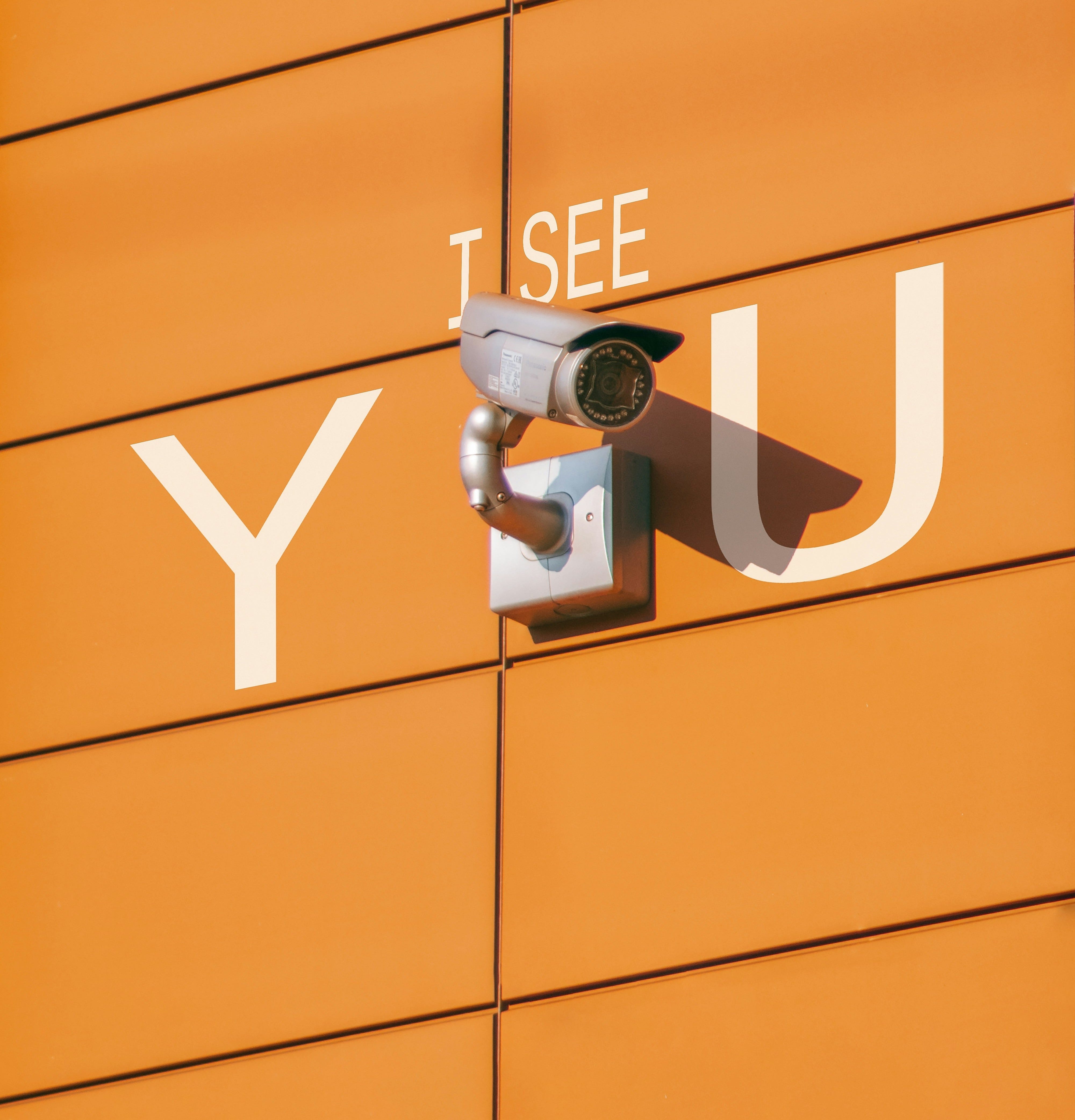
Photo by Alexey Sabulevskiy on Unsplash
First, a personal announcement: I’ll be co-leading a workshop, along with retirement coach Ivory Brown, on “Finding Meaning and Purpose in Your Next Act,” at the Re/Imagining Retirement Summit at Towson University, Sept. 25. The one-day event features longevity and retirement expert Simon Chan as keynote speaker and a number of workshops, including mine. You can register here. I’d love to see you there!
Maybe you remember the dire warnings in our younger days about Big Brother. The name comes from George Orwell’s novel 1984, where it refers to the supreme leader of a totalitarian surveillance state. Big Brother was watching every move you made and listening to everything you said. Concerned patriotic Americans were quick to warn us that Big Brother was precisely what surrendering to Communism would mean for us.
Clearly, somebody must not have been paying attention, because the surveillance state has arrived in the U.S., without the Communists. Cameras watch from our front doors, from office buildings, and from satellites, all to protect us from criminals and terrorists.
I seldom bother debating what is. What worries me is that surveillance has become so normalized that when we enter our later years, it will seem business-as-usual for our lives to be continuously monitored – when we lie down, when we rise up, and every moment in between. And it won’t be because of Big Brother. More likely, it will be because of our own children.
In 20 states it is legal to place cameras in nursing homes, and some states also permit them in assisted living facilities. The rationale remains the same: It is for our own protection. Should we fall, surveillance alerts our loved ones (and the institution). If caregivers abuse us, our loved ones will have proof. And of course, it goes without saying, it offers peace of mind to the children who can’t be with us 24/7 to make sure we are taking our meds and eating our meals and thriving to the greatest possible extent.
Privacy and Dignity
And all we have to sacrifice is our privacy. Also our dignity. Because being assisted to the shower or the toilet, or having our undergarments changed, will not show us at our best.
Is that an acceptable tradeoff for protection?
It’s really an ethical question, and not a black and white one. It’s a question we should be asking ourselves and our families now.
The first dilemma is consent. The laws generally insist that the subject of surveillance – the patient in institutional care (or at home, for that matter) – give their consent to being monitored. As long as we patients have all our marbles, it’s a simple yes or no. But it gets complicated if we are suffering from dementia or other debilitating conditions that make us unable to give our consent. In that case, who gets to decide?
Sometimes a family member can give consent on the basis of “precedent autonomy,” which means they are acting as we would have wanted them to when we were fully capable of deciding. (This is a point you may want to address in your medical power of attorney papers, the better to to leave less room for doubt.)
Altering Relationships
A thornier issue is how cameras alter the relationship between caregivers and patients. As a patient, you want caregivers who treat you with respect and bring a human touch to your care. But caregivers might well interpret the presence of cameras as a sign of distrust – positioning them as potential suspects rather than partners in care. The likely results: care strictly by the book, no more nor less, and a less than friendly patient-caregiver relationship.
Whether cameras actually deter bad behavior or improve quality of care is an unknown. “There’s zero research cited to back up these [state] bills,” a University of Washington gerontologist told the New York Times.
While you are wrestling with the legal and ethical questions, here are some other thoughts to consider.
Other medical alert devices can monitor patients less invasively than cameras.
For care at home, don’t just install a device, says Dr. Jane Barratt, an international advisor on aging and social policy. Make devices part of a care plan that establishes what is being monitored, what data is kept, who can access it, what triggers an alert, how to pause the system, and how consent will be reviewed as circumstances change.
“Cameras are a symptom, not a solution,” say gerontologist Dr. Clara Berridge. As a society, we need to address the systemic problems with the health care system that make cameras seem necessary.
Give some thought – and discuss with your family members – where you want to draw the line between surveillance for your protection and Too Much Information. As always, the best time for discussion is before it becomes necessary.
Great piece. Your journalism is showing! Very important information that all of us need to think about now.
Uh, no for me. I was at a conference a few years ago where a tech bro was promoting a device that adult children could place in their parents’ refrigerators to monitor food consumption. I immediately texted my daughters to let them know what might happen if I ever found such a device in my refrigerator