

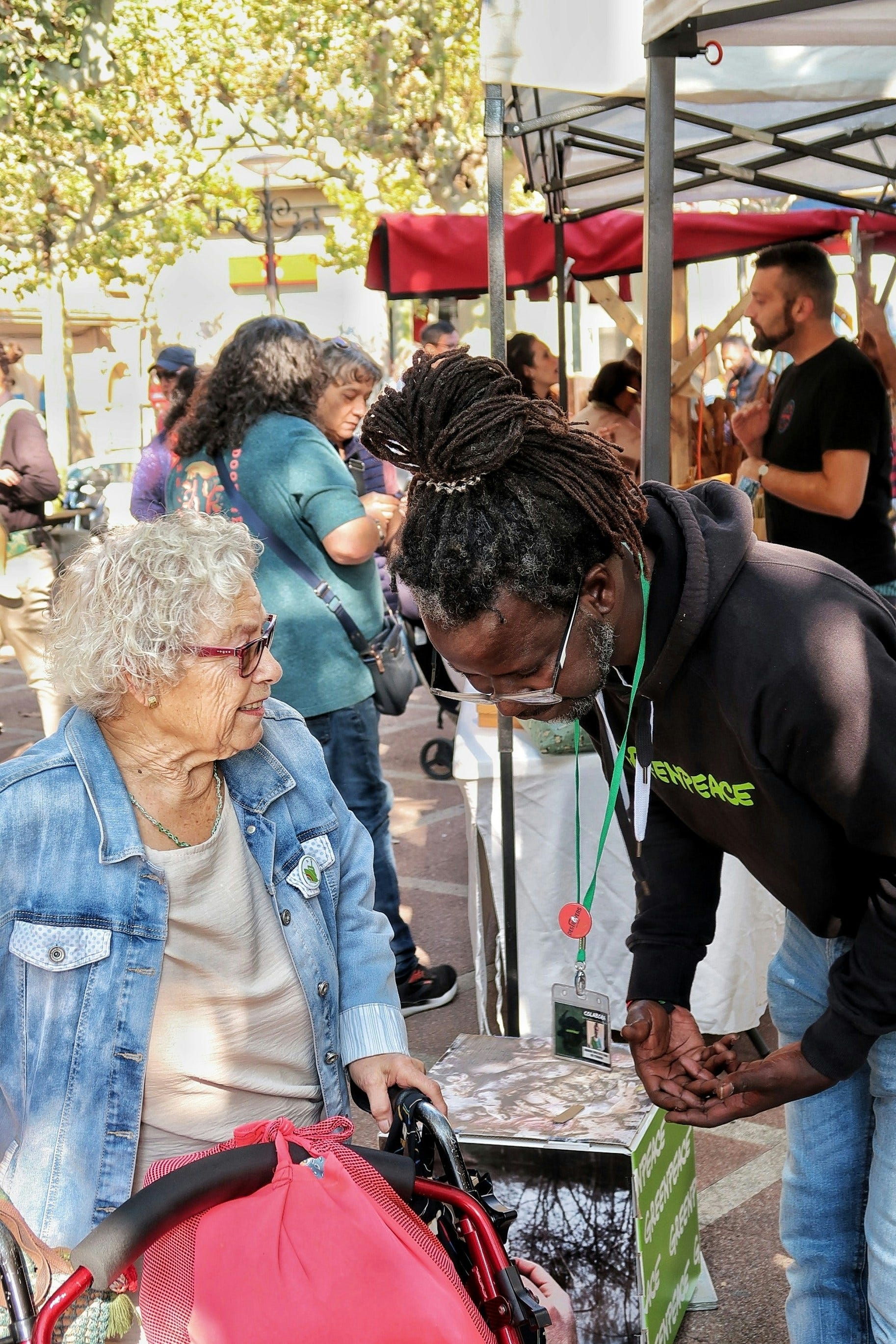
Photo by Alba Calbetó on Unsplash
Where would you prefer to age: in your home or a nursing home?
You don’t need a Gallup Poll to know how older adults answer that question! By a commanding margin, aging in our own homes, or “aging in place” as it’s usually called, is the people’s choice.
This despite the fact that a significant share of us do not own our own homes and, as renters, do not enjoy the blessings of stable housing. This also despite the fact that many of us will be unable to maintain our first choice of residence forever. The house may be unsuitable because of stairs at the entrance or lack of a first-floor bedroom and bathroom, or lack of safety features such as grab bars, or a location far from groceries, pharmacies, and transportation options. And obtaining all the in-home services necessary to ensure medical care, day-to-day needs, and comfort adds up to an expensive proposition – before we consider how realistic it is to expect the necessary caregivers and aides, given that the current supply is well below the current demand.
But maybe we’re thinking about “aging in place” too narrowly.
A recent article in Shelterforce, a magazine about community development, suggests that the focus should shift from “keeping older people in their homes at all costs” to “supporting them to remain in – and part of – their communities.”
Housing, disability, and community development advocates have argued for years that a person’s health and well-being are more than a matter of good medical care. They also depend on having safe and stable housing, reliable transportation, walkable communities, and access to social amenities.
Community Alternatives
What would thinking about community solutions to aging in place look like?
Perhaps you’re fortunate to live in a “Naturally Occurring Retirement Community (NORC), a neighborhood or building that wasn’t designed to be for older adults but has evolved to be one over time.
Or perhaps you have chosen to live in an “age-friendly community.” AARP’s Livable Communities Program encourages local leaders, elected officials, and parent organizations to design communities that improve quality of life for all ages. Localities that earn the Livable Communities designation go through a process of assessment, planning, implementation and evaluation. (You can find out if your community is part of the AARP network through an online lookup feature.)
The Village Movement offers another alternative. Villages are community-based, nonprofit, grassroots groups that neighbors organize to help older adults remain in their homes and communities for as long as possible. Though the well-established villages have paid staff, most of the services are provided to members by volunteers.
Generally, villages coordinate members’ access to transportation, health and wellness programs, tech support, home repairs, and social and educational activities. They may keep a directory of trusted and vetted plumbers, electricians, and other service providers.
The Village to Village Network is a national nonprofit that provides guidance and models for setting up local villages. The model for the village is Boston Village (formerly Beacon Hill Village), which started 25 years ago. Boston Village offers grocery and transportation services and home help referrals. It encourages members with similar interests to organize groups, and it also offers classes and social engagement activities based on members’ interests. Members pay an annual fee, with reduced fees for low-income households.
Finally, if you can afford it, a senior living facility can function as a community that offers medical services, recreation, and transportation.
In the U.S., it seems, the myths of individual liberty and self-reliance have conditioned us to think about many social problems as issues for an individual to solve on their own. That has definitely been the case with aging in place.
But humans are social animals. All people, old and young, need connections to other humans to thrive. It is time to think more broadly about aging in place and recognize that the “place” for “aging in place” can and should be within a supportive community.
My friend "S" is probably an outlier. In her late 70s she told me that she didn't fancy the prospect of aging in place in Manhattan, where she might become isolated if & when she became infirm. She visited about a dozen retirement communities in at least four states, learning about them & herself, e.g., what was optional, what was non-negotiable, what didn't work for her, etc. In her early 80s, "S" selected a place in PA that she likes very much, where she can keep her car and her dog. She's glad she did the research well ahead of need.
I am so fortunate that my father had the insight to move himself and my mom to a continuous care community. Dad is now gone, but Mom has been able to stay in her apartment, with occasional stays at the assisted living wing on the other side of the complex, after she experiences a fall.